Project Manager
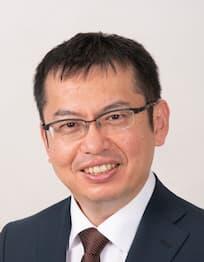



Research institution in Japan
Nagasaki University / Kitakyushu University / Ryukoku University / National Advanced Institute of Industrial Science and Technology (AIST) / Kyoto University / Kyowakiden Industrial Co., Ltd. / Kyowakiden Vietnam Co., Ltd. / Fuso Corporation / Mitsubishi Chemical Water Solutions Co., Ltd.
Research institutions in Vietnam
Hanoi University of Civil Engineering / Hai Phong Water Supply Joint Stock Company / Water Resources University / Hanoi University of Architecture / Vietnam Water Supply and Drainage Association / Ministry of Construction / DNP Water Company
Research duration
July 2023 – June 2028, 5 years
Overview of the Research Project
In Vietnam, rapid economic growth has fueled urbanization and industrialization, leading to a growing demand for water. To meet this trend, the Vietnamese government is promoting the development of the water supply system under its Vision 2050 strategy, aiming to meet the water needs of all urban and industrial areas by 2050. Urban water coverage has steadily improved, reaching 92.8% in 2021, up from 84% in 2016.
Besides increasing water supply, the strategy also enhances water quality to ensure a safe and sustainable water supply system. At the same time, wastewater generation has increased sharply in line with water consumption, while drainage and wastewater treatment infrastructure remains inadequate. As a result, a large amount of wastewater is discharged directly into rivers without proper treatment.
According to the report, 87% of urban domestic wastewater, about 30% of industrial wastewater, all of agricultural wastewater, and about 95% of livestock waste are discharged into the environment without treatment, contributing to the spread of organic pollutants and heavy metals. If this trend continues, the increasingly serious pollution of rivers could exceed the capacity of traditional water treatment technologies, thereby threatening the safety of water sources.
Although advanced treatment technologies such as ozonation and bioactivated carbon are necessary to treat these pollutants, high investment and operating costs have limited their widespread adoption. Furthermore, Vietnam is currently in the process of enhancing its research capacity in advanced water treatment, leading to the proposal to implement the SATREPS project to develop cost-effective advanced treatment technologies.
Traditional advanced processing systems often require multiple processing steps and various types of equipment, resulting in high investment costs and energy consumption. Therefore, technological innovation is needed to reduce overall costs through simplifying system configurations and improving energy efficiency, thereby reducing both initial investment costs and operating and maintenance costs.
Other project information:
Nagasaki University Project Website (JP)
SATREPS Project Information (JST)
Introducing SATREPS
Science and Technology Research Partnership for Sustainable Development
Collaborative Scientific and Technological Research for Sustainable Development
SATREPS is a Japanese government program aimed at promoting international collaborative research to address global issues. The program promotes international joint research activities as part of “science and technology diplomacy,” connecting science and technology with diplomacy to foster the development of both fields. >> More information: JST Website